
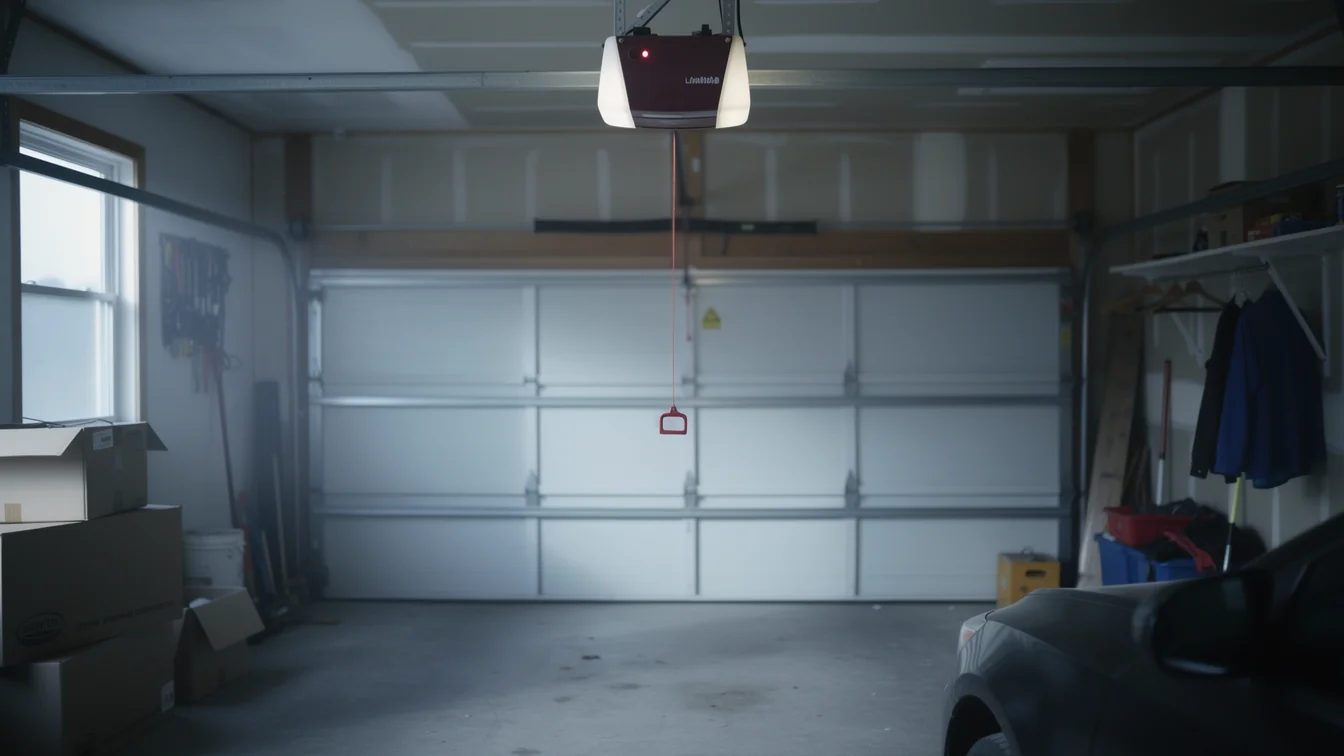
When the Power Goes Out, Your Opener Doesn't Know What Year It Is
Sioux Falls homes built mostly between 1938 and 2006 face real opener trouble when a winter power cut hits.
Read moreSioux Falls homes built mostly 1983-vintage hit cold-weather spring failure hard. Here's what's going on, why the cold makes it worse, and how to check your own door.
Local detail
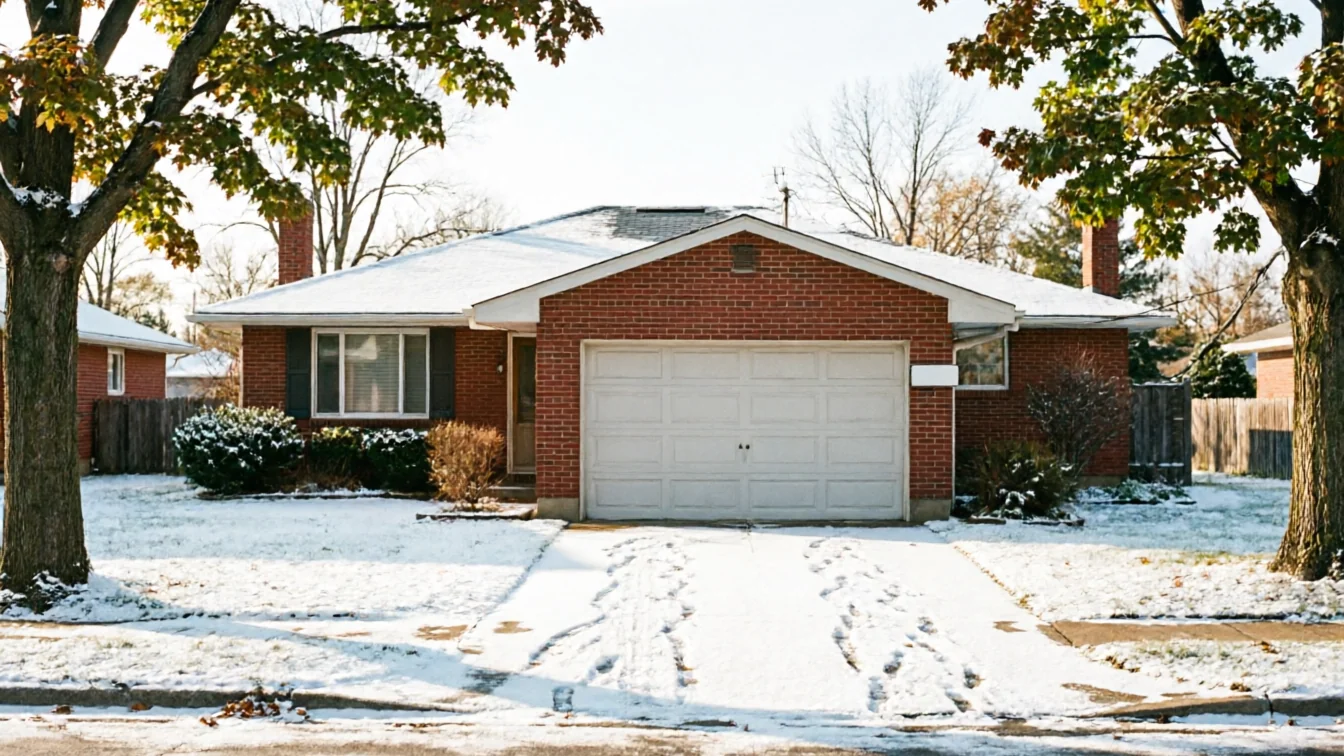
A torsion spring breaking isn't random. It's metal fatigue that's been building for years, and it picks the worst possible moment to finish the job - usually a cold morning when you're already late. Around Sioux Falls, most of the housing stock went up between 1938 and 2006, with the bulk of it from the 1980s and 90s across the fourteen named areas in the service territory. That matters because a door installed in, say, 1985 is sitting on springs that have outlived their rated cycle count even if nobody ever touched them. Steel fatigues whether or not you use the door. A spring rated for 10,000 cycles doesn't care if you only opened the door twice a day - it still winds down the same clock.
What you'll notice first is usually small: the door feels heavier when you lift it by hand, the opener strains a little more than it used to, or there's a loud bang from the garage that turns out to be the spring letting go. Once it's broken, the door won't stay up on its own and the opener will struggle or stop working the chain entirely. That's not a coincidence of bad luck - it's a 1980s-era spring finally giving out.
The area
Sioux Falls sits in a severe cold climate band, and cold is hard on steel in a specific way: it makes the metal more brittle right at the moment the spring is under its highest tension, which is when the door is closed. A spring that's been slowly fatiguing for twenty-some years can hold on through a mild fall and then fail the first week temperatures drop hard. This isn't a theory about garage doors in general - it's what happens to aging torsion springs under winter load, and it's why the failure calls cluster when the cold sets in rather than spreading evenly across the year.
The cold also makes the symptoms worse before the break happens. Lubricant thickens, rollers bind a little, and the opener has to work harder to make up for a spring that's already losing tension. If your door has been getting noisier or slower to open as the temperature's dropped, that's the spring and the cold working against each other, not the opener failing on its own.
What we find
The most common mistake is assuming a slow or heavy door means the opener motor is going bad. In a lot of these cases the opener is fine - it's just been fighting a spring that's lost most of its lift for months. Replacing the opener fixes nothing if the spring underneath is the real problem, and you end up paying twice.
The other mistake, especially in a house from the 1983 median build year around here, is treating the spring as a part you fix instead of a part you replace in pairs. If one side has fatigued after decades of cycles, the other side is close behind it even if it hasn't broken yet. Replacing just the broken spring and leaving the other one in is a short-term patch, not a fix, and you're likely back out here again within a year or two. I'll be honest: I don't have a cycle count or a firm lifespan number to give you - springs vary by load and use - so I'm not going to pretend there's a magic number of years where you're safe.
How we work
You can check a few things before you call anyone. With the door closed and the opener disconnected, lift the door by hand. It should feel close to weightless and stay roughly level wherever you let go. If it feels heavy, drops on its own, or you hear a grinding or popping sound from the spring area, that's your answer - something's going. Look at the springs themselves, the two coiled bars above the door track: a gap in the coil is a spring that's already broken, not one about to.
Don't try to adjust or remove a torsion spring yourself. It's under enough tension to cause real injury, and that's true whether it's new or twenty years old. If you're just checking cables, rollers, or listening for noise, that's safe to do from outside the spring area. If your house falls into that common 1980s-90s build range for this area, treat a heavy or noisy door in cold weather as a spring question first, not an opener question.
Questions
I don't have a firm lifespan number to give you - it depends on cycle count and load, not just age. What I can tell you is that a lot of the housing stock here dates to the 1980s and 90s, and springs from that era are well past any reasonable service life, cold weather or not.
Cold makes the steel in the spring more brittle and the lubricant on the rollers and track thicker, so a spring that's already fatigued loses more of its lift right when it's working hardest. The door was probably getting harder to lift before winter - the cold just makes it obvious.
Both, if the door has two. They're under the same load and the same age in almost every case, so if one has fatigued enough to break, the other is close behind. Replacing only the broken one usually means a second call within a year or two.
No. A torsion spring holds enough tension to cause serious injury even when it looks still. Checking cables, rollers, or the track for wear is fine to do yourself - working on the spring itself isn't.
Recommendation
More garage door guides for Sioux Falls homeowners.
Sioux Falls homes built mostly between 1938 and 2006 face real opener trouble when a winter power cut hits.
Read more
Sioux Falls homes built mostly between 1938 and 2006 carry specific garage door noises tied to age and cold winters.
Read more
Most Sioux Falls homes date to the 1980s and 90s, and our winters are hard on original doors.
Read moreReady when you are
Sioux Falls Garage Door Co repairs and installs garage doors, springs and openers in Sioux Falls, SD and the surrounding area.