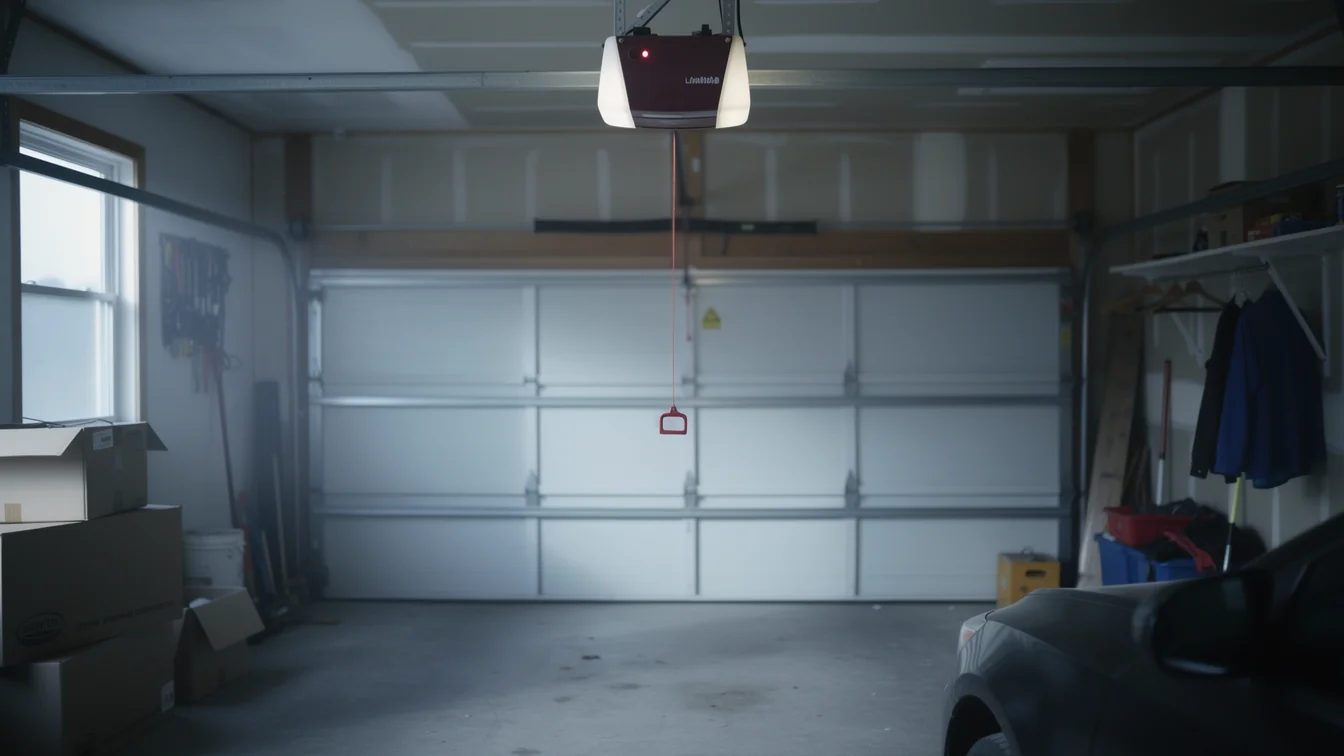
When the Power Goes Out, Your Opener Doesn't Know What Year It Is
Sioux Falls homes built mostly between 1938 and 2006 face real opener trouble when a winter power cut hits.
Read moreSioux Falls homes built mostly between 1938 and 2006 carry specific garage door noises tied to age and cold winters. Here's what each sound is actually telling you.
Local detail
Every sound a garage door makes is the hardware telling you something about its age and its load. In the Sioux Falls service area, that matters more than most places, because the housing stock spans 1938 to 2006 with a median build year of 1983. That's a wide range, but the center of gravity is firmly 1980s and 90s construction across the 14 named areas that make up this territory.
A door built in that era was engineered with steel torsion springs, steel rollers, and lift cables sized for the opener technology of the time. Thirty-five to forty years later, those same parts are still doing the lifting on a huge share of houses here, and metal fatigues the same way whether anyone notices or not. A grinding sound usually means a dry or worn roller riding in the track. A sharp pop or bang is almost always a torsion spring letting go of tension it's held for decades. A rhythmic clicking as the door travels is often a cable strand starting to fray against the drum.
None of these sounds are random. Each one points to a specific part that's reached the end of what it was built to do, and in this housing stock, that end tends to arrive right around now.
The area
Sioux Falls sits in a cold-severe climate band, and that's not a footnote here, it's the reason winter calls spike. A garage that sits near 60 degrees in August and drops into single digits in January puts real stress on steel. Torsion springs lose a measurable amount of tension as the metal contracts in the cold, which means a spring that was quietly doing its job in September can sound like it's straining by January, even though nothing physically changed except the temperature.
Lubricant behaves the same way. Grease formulated for moderate climates thickens in deep cold and stops doing its job on rollers and hinges, which is exactly when you start hearing the grinding and squealing that wasn't there a few months earlier. Steel tracks also contract slightly in cold weather, which can turn a roller that was riding fine in July into one that's binding slightly in January, especially on an older track that's already a little out of plumb.
The practical result: a noise that shows up every winter and goes quiet every spring usually isn't a coincidence. It's the cold finding whatever was already marginal in the hardware and making it audible.
What we find
The most common mistake is treating every noise as a lubrication problem. WD-40 on a dry roller buys a week, maybe two, and then the sound comes back louder, because WD-40 is a solvent, not a lubricant, and it washes out whatever grease was left. The grinding doesn't mean the part needs oil. It usually means the roller itself is worn out and needs to be replaced, which on a lot of the 1980s and 90s doors running through this area means steel rollers that were never designed to run quiet in the first place.
The second mistake is ignoring a popping sound because the door still opens. A torsion spring under uneven tension will usually still lift the door, right up until it doesn't, and when it lets go fully it does so with enough force to bend the shaft or drop the door hard. Given the age of the housing stock here, a lot of these springs are original or close to it, which means they're overdue regardless of whether they're making noise yet.
The third mistake, and this one's on us to say plainly: not every noisy door is worth fixing piece by piece. On a door old enough and worn enough, patching one part just moves the next failure down the road a few months.
How we work
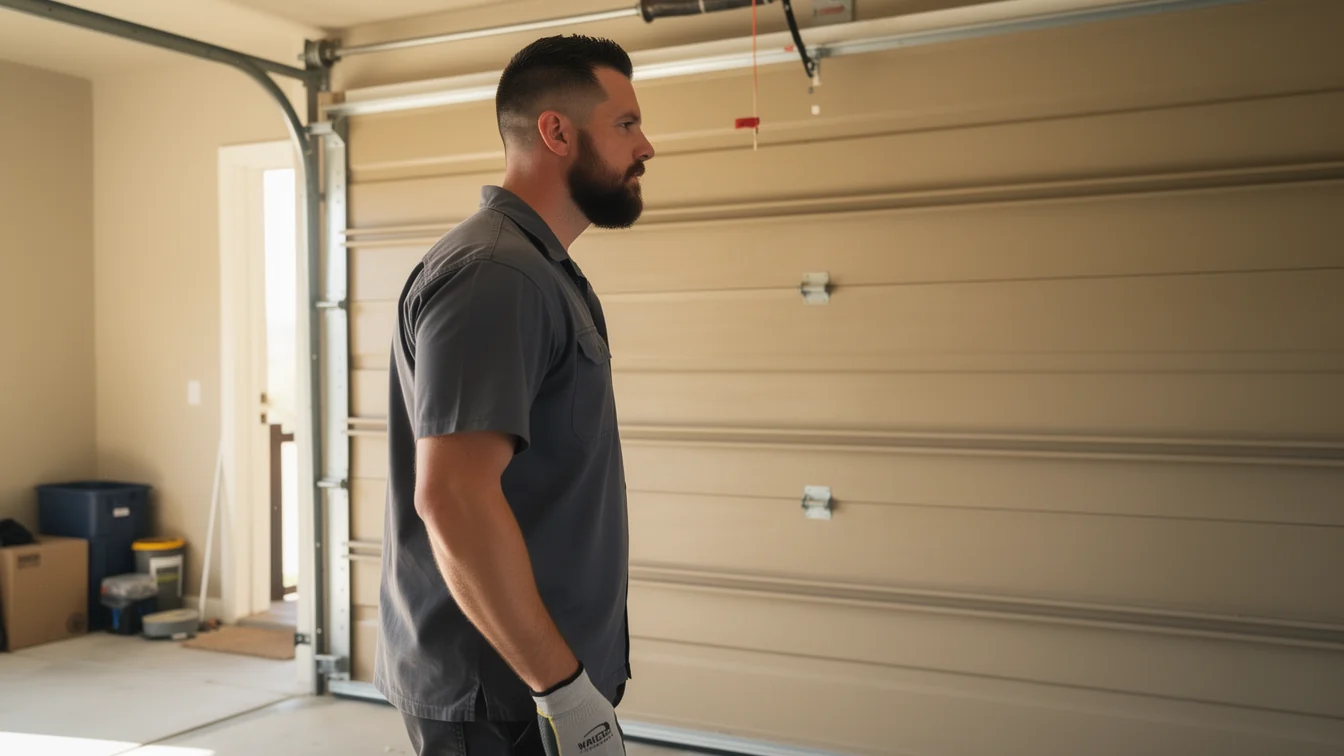
You can do some of this without a toolbox. Open and close the door slowly by hand with the opener disconnected, and listen for where the sound happens, at the bottom, the middle, or right at the top near the springs. A sound that happens at the same spot every time points to a specific roller or hinge in that section of track. A sound that happens the whole way up usually means the springs.
Look at the rollers themselves if you can see them. Flat spots, rust, or a roller that looks oval instead of round means it's done. Check the cables for frayed strands near the bottom bracket, a few broken strands there is a warning sign worth acting on before it becomes a dropped door.
Here's the honest limit: torsion springs are under real tension and they are not a do-it-yourself repair. We're not going to pretend otherwise just to sound thorough. If what you're hearing is coming from the spring area at the top of the door, that's a call, not a project. For anything else, get in touch and we'll tell you straight whether it's a quick fix or something bigger.
Questions
No. Sioux Falls sits in a cold-severe climate band, and grease that lubricates fine in warm months thickens up in deep cold and stops protecting rollers and hinges. A grinding sound that only shows up in winter is usually dry or worn rollers finally being exposed by the temperature, not a new problem.
Disconnect the opener and move the door by hand, slowly. A sound localized to one spot in the track as the door travels is almost always a roller or hinge. A sound right at the top, especially a pop or bang, points to the torsion springs, which given this area's housing stock are often original hardware from the 1980s or 90s.
Oiling the spring coils themselves is fine as light maintenance, but it won't fix a spring that's actually losing tension or fraying, and torsion springs hold enough force to cause real injury if handled wrong. If the noise is coming from the spring area, that's a call for someone who does this, not a weekend project.
Recommendation
More garage door guides for Sioux Falls homeowners.
Sioux Falls homes built mostly between 1938 and 2006 face real opener trouble when a winter power cut hits.
Read more
Sioux Falls homes built mostly 1983-vintage hit cold-weather spring failure hard.
Read more
A look at what a garage door service call actually inspects in Sioux Falls, tied to the city's 1938-2006 housing stock and severe cold winters.
Read moreReady when you are
Sioux Falls Garage Door Co repairs and installs garage doors, springs and openers in Sioux Falls, SD and the surrounding area.