
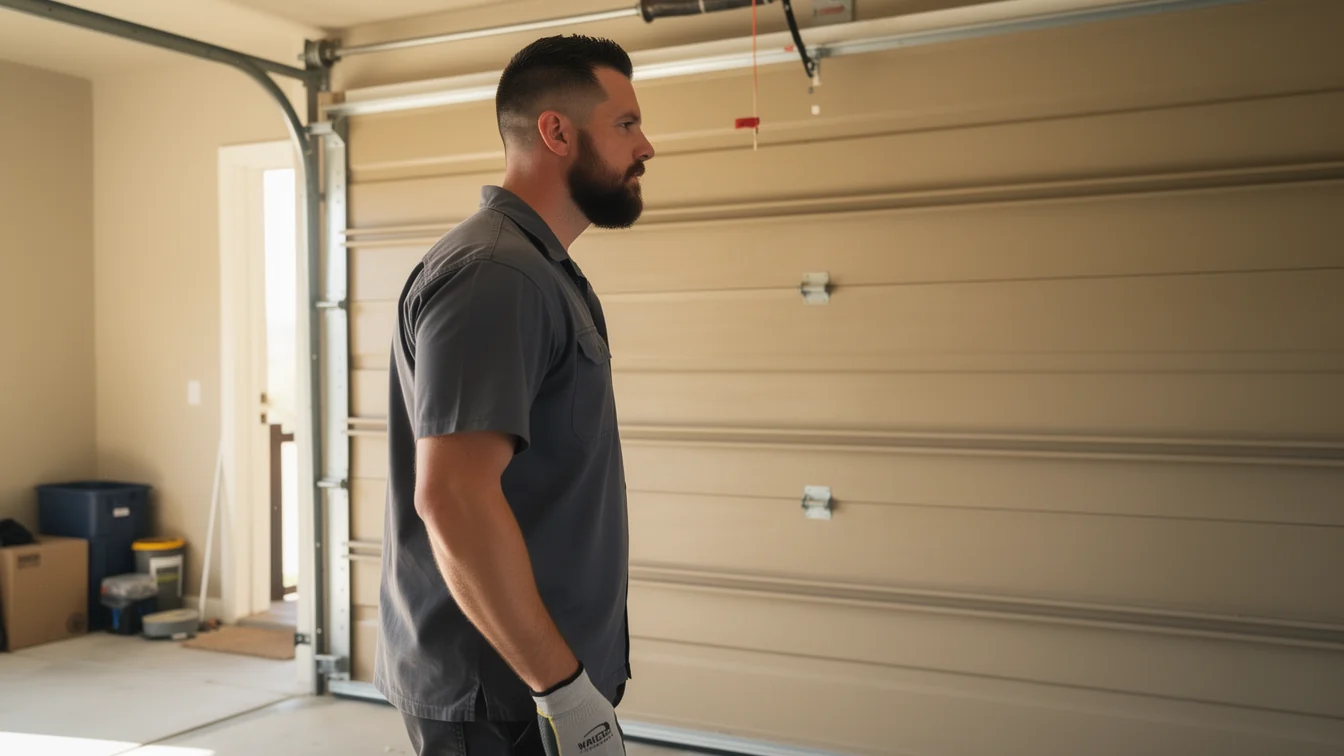
What That Grinding, Popping, or Clicking Sound in Your Sioux Falls Garage Door Really Means
Sioux Falls homes built mostly between 1938 and 2006 carry specific garage door noises tied to age and cold winters.
Read moreMost Sioux Falls homes date to the 1980s and 90s, and our winters are hard on original doors. Here's how to tell if yours is worth repairing or replacing.
Local detail
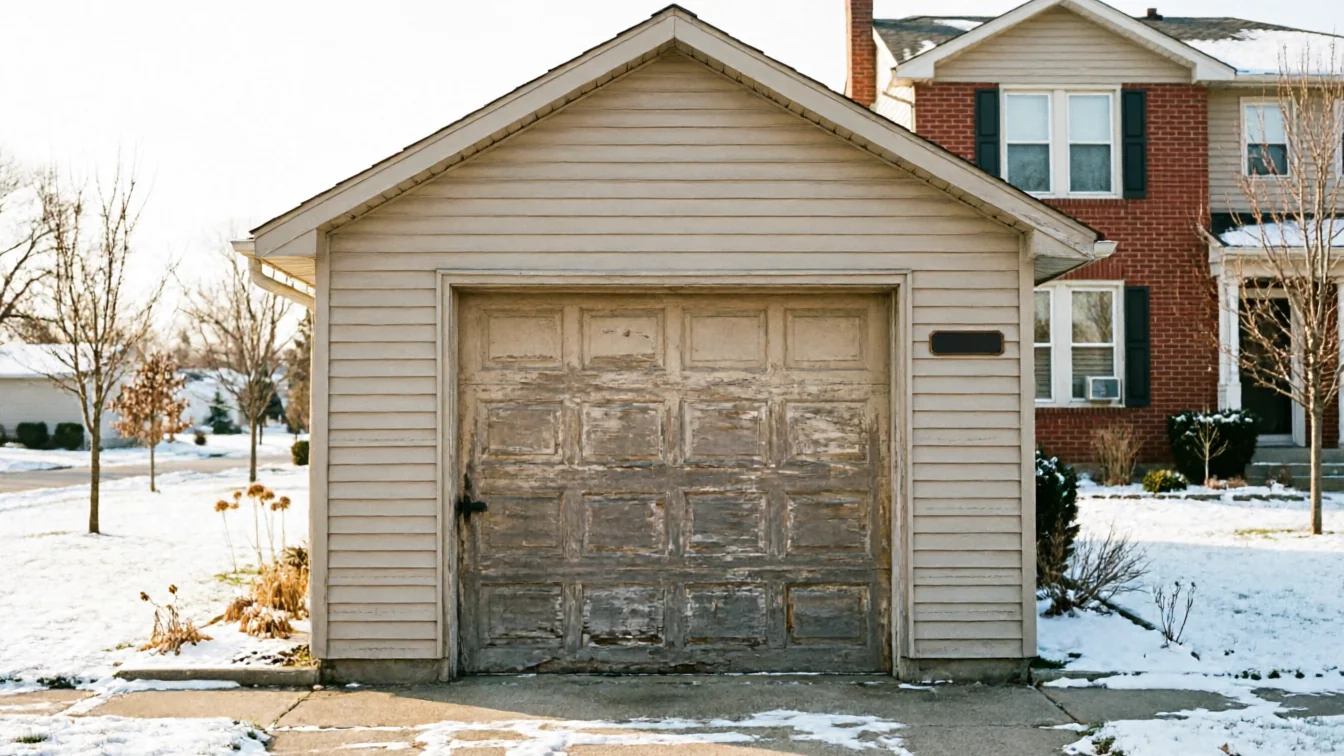
Across the Sioux Falls service area, homes were built mostly between 1938 and 2006, with the median year sitting at 1983. That puts a lot of garage doors in this town at 30 to 40 years old if they're still original, which is right around the point where the question shifts from "can we fix it" to "is it worth fixing." Fourteen named areas in and around town carry this same 1980s-90s stock, so this isn't a one-neighborhood issue. A door from that era usually has a lighter gauge steel skin, a single torsion spring sized for the weight standards of its day, and hardware that's been through three or four decades of temperature swings. None of that means it's junk. It means every call starts with figuring out what's original, what's been replaced, and how much life is left in the parts that haven't been touched. A door that's had its spring and opener swapped out over the years is a different animal than one that's never been touched since the house was framed.
The area
We're in a severe cold climate band here, and that matters more for an older door than people expect. Steel contracts in the cold, and on a 30-plus year old door the panels, seals, and hinges have gone through that contraction cycle thousands of times. Weatherstripping on original doors is usually the first thing to fail - it hardens, cracks, and stops sealing, which lets cold air and moisture into the garage and onto the torsion spring and cables. Springs rated decades ago weren't necessarily sized for the cycle counts we ask of doors now, and cold makes steel more brittle, so an old spring that's been fine for years can snap in January rather than July. If your house falls in that 1983 median build range, the spring and hardware have likely seen more cold-weather stress cycles than a door installed in the last ten years, which is a real factor in whether we recommend fixing a single part or replacing the whole unit.
What we find
The common mistake is treating the door as one unit when it's really a collection of parts with different lifespans. We get calls where someone wants to replace an entire door because the opener is dying, or wants us to "just fix the spring" on a door whose panels are rusted through at the bottom from decades of melting snow runoff. On a house built in the 1983 median range, it's common to find an opener that's been replaced once already but a track and spring that are still original - and those original parts are usually the ones showing their age first, since they take the physical load every cycle. The other mistake is assuming newer always means better. A door from the 1990s with steel panels and a properly maintained torsion system can outlast a cheaper replacement installed last year. Age alone isn't the deciding factor - what matters is which specific parts are worn, and whether the door's structure is still sound enough to carry new hardware.
How we work
Before you call anyone, look at three things. First, the weatherstripping along the bottom and sides - if it's cracked, shrunk, or gapping, that's a sign of age-related wear common on doors from the 1983 median construction era, and it's a cheap fix on its own. Second, look at the bottom two panels for rust or flaking, especially near the ground, since that's where snowmelt sits longest in our winters. Third, with the door closed, check if the torsion spring (the coil above the door, not the cables) has visible gaps or a separation in the coil - that's a spring at or past end of life, and in this climate it's not something to leave for the next cold snap. We're honest that some of this is hard to judge without pulling the door apart, and we won't tell you a 40-year-old door with a rusted frame is worth saving just to get the repair call - sometimes replacement really is the better number.
Questions
If your Sioux Falls home falls in the common 1980s-90s build range for this area, check the spring and track for a manufacture date sticker, or look at panel style - wide raised panels without modern insulation seams usually mean original. We can confirm this on a visit by checking the hardware stampings.
Yes. We're in a severe cold climate band, and steel hardware going through repeated freeze cycles wears faster than it would in a mild climate. Weatherstripping, springs, and cables all show age sooner here than they would somewhere warmer.
Sometimes. If the panels are rusted through or the track is bent beyond adjustment, patching individual parts can cost more over time than one new door. We'll tell you honestly when a repair isn't worth it rather than stack fixes on a door that's done.
Torsion springs and weatherstripping. Both take direct hits from our cold winters, and on a door from the 1983 median build era, those original parts have usually seen more freeze-thaw cycles than they were built for.
Recommendation
More garage door guides for Sioux Falls homeowners.
Sioux Falls homes built mostly between 1938 and 2006 carry specific garage door noises tied to age and cold winters.
Read more
Sioux Falls homes built mostly 1983-vintage hit cold-weather spring failure hard.
Read more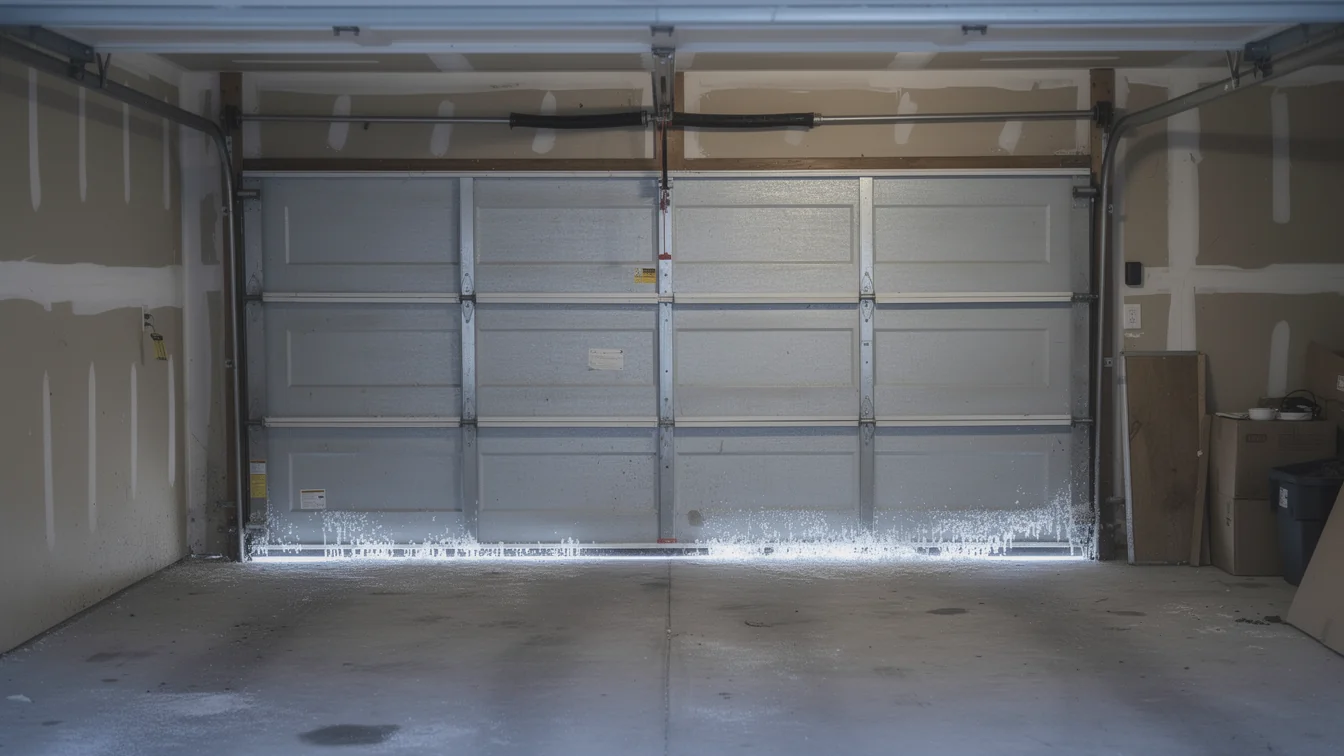
A look at why garage doors fail differently across Sioux Falls and nearby towns, tied to housing age, winter cold, and what's worth fixing versus replacing.
Read moreReady when you are
Sioux Falls Garage Door Co repairs and installs garage doors, springs and openers in Sioux Falls, SD and the surrounding area.